The Clutches of Online Gambling and Drugs

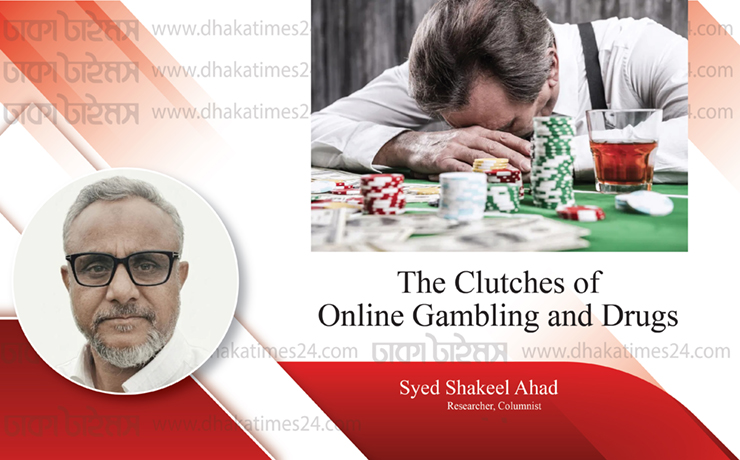
We all need to know what is happening around us. The primary architects of any country's social, economic, and cultural progress are its youth. A nation reaches the pinnacle of prosperity by relying on the intellect, innovative power, and energy of its youth. But today, that promising youth of Bangladesh is facing an unprecedented and severe dual crisis. On one hand is the blue venom of drugs, and on the other is online gambling, which has invaded households under the modern guise of technology. These two toxic afflictions are not only physically and mentally destroying the young generation, but they are also shaking the social and economic foundations of an entire nation. The situation is no longer confined to isolated crimes or individual moral lapses; it has transformed into a national disaster.
In this era of extreme technological advancement, while the internet and smartphones have made human life easier, their misuse has brought about catastrophic consequences. In the past, gambling sessions were restricted to specific hidden dens involving a small section of society. But today, online gambling or "e-betting" has reached the palm of every youth's hand. Using apps, websites, and various social media platforms, teenagers, young adults, and even office workers are easily engaging in this ruinous game.
The primary driver behind the expansion of online gambling is the accessibility of the country's digital financial transaction systems. Mobile Financial Services (MFS) such as bKash, Nagad, and Rocket allow money to be transferred with extreme secrecy. Furthermore, using cryptocurrency and international payment gateways, millions of taka are being laundered out of the country abroad.
The most terrifying aspect of this disease is its psychological trap. Initially, a small investment is made with the lure of high returns. Once a youth falls for this greed, they get trapped in a blind cycle of continuously trying to recover lost money. Eventually, when personal funds run out, borrowing, stealing family savings, misusing credit cards, and ultimately various criminal activities begin. Today, from university students to rural teenagers in remote areas, many are falling into this digital gambling trap and becoming destitute.
Alongside online gambling, the toxic shadow of drugs is further eating away at our youth. While traditional drugs like Phensedyl or cannabis were more prevalent in the past, they have now been replaced by dangerous synthetic and chemical drugs. Yaba, Ice (methamphetamine), LSD, MDMA, and various prescription drugs are destroying the nervous systems of young people.
These deadly drugs are constantly entering the country through border routes. Powerful dealer and trafficker syndicates have systematically expanded their networks targeting the youth. It is no longer just university students or unemployed youth; drugs have now reached school-going teenagers as well. Overdoses are leading to mental imbalance, heart disease, kidney and liver failure, and the premature death of countless promising lives.
Online gambling and drugs—though two distinct afflictions—act as complements to each other. Losing large sums of money in gambling causes young people to suffer from severe mental depression, despair, and anxiety. To seek temporary relief from this mental agony, they turn to drugs. Conversely, drug-addicted youth venture down the risky path of online gambling in hopes of obtaining quick money to fund their addiction.
The convergence of these two social vices is becoming a breeding ground for various crimes. Juvenile delinquency or "gang culture" is rising as youth try to secure money for gambling and drugs. Incidents like mugging, theft, extortion, domestic violence, and in some cases, murder are taking place. Very recently, investigations into the suicides of several brilliant students revealed that massive debts from online gambling or severe depression from drug abuse were the primary catalysts for their deaths.
The impact of this dual crisis is not limited to individuals; it is a multidimensional disaster.
When a young person in a family becomes addicted to drugs or gambling, the peace and order of the entire family are destroyed. Parents' lifelong savings are exhausted paying off their child's debts or funding medical treatment. Many families are forced to live isolated lives after being socially humiliated.
Through online gambling, hundreds of millions of taka are laundered out of the country every day via illegal hundi channels and cryptocurrency. As a result, the national economy is severely damaged. On the other hand, the vast financial waste by youth on drugs prevents those funds from being invested in the country's productive sectors.
Bangladesh is currently passing through the greatest opportunity in its history, known as the "demographic dividend"—an abundance of working-age population. But if a major portion of our youth becomes crippled by drugs and gambling, this vast population will turn into a massive burden for the country rather than an asset.
Although the state possesses the goodwill to control online gambling and drugs, several realistic challenges and limitations remain.
First, many of our country's existing laws are inadequate to combat modern digital crimes. Although some steps are taken under the Digital Security Act or Cyber Security Act, the lack of a timely and stringent law specifically to control online gambling or stop e-betting has been felt for a long time.
Second, gamblers remain one step ahead in their use of technology. Even though the Bangladesh Telecommunication Regulatory Commission (BTRC) blocks hundreds of websites and apps, operators easily reactivate them using VPNs and mirror domains. Gambling advertisements are freely promoted through social media influencers or illegal sports streaming sites, where effective monitoring is lacking.
Third, there is a shortage of quality and adequate rehabilitation centers in the country for treating drug addicts. Many existing private rehab centers operate purely for profit, where inhumane treatment is often meted out instead of providing scientific and psychological care.
To overcome this national crisis, the state, society, and families must step forward in a coordinated manner. It is impossible for any single agency to eradicate this. A multifaceted master plan or action plan is the need of the hour.
BTRC and the Cyber Police must be equipped with modern technology and skilled personnel. Capabilities must be enhanced to identify and instantly block online gambling apps, sites, and the social media pages promoting them.
Strict monitoring by the Bangladesh Financial Intelligence Unit (BFIU) of Bangladesh Bank must be ensured over MFS and bank accounts used for gambling transactions. Suspicious transactions should be swiftly identified, accounts frozen, and legal action taken.
Laws must be amended to classify digital gambling as a specific and strictly punishable offense.
Monitoring by the Border Guard Bangladesh (BGB) and law enforcement agencies must be doubled to stop drug smuggling along the country's borders.
Alongside arresting drug "retailers," the main godfathers and financial backers of drug syndicates must be brought to justice. The zero-tolerance policy must be strictly implemented on the ground rather than remaining merely on paper.
Parents must become aware of their children's digital lives. Parents need to monitor with deep concern what young people are doing on the internet, why their expenses have suddenly increased, or why their behavior has changed.
Educational institutions should focus not only on textbook education, but also expand opportunities for moral education, sports, cultural activities, and social service work. It is essential to appoint mental health counselors in every school, college, and university.
Widespread awareness campaigns regarding the dire consequences of gambling and drugs must be conducted through mainstream media, social media, and religious institutions.
At the local level, sports, book reading clubs, and social resistance committees should be established for youth so that society can protect them before anyone takes a step down the wrong path.
Modern, scientifically sound, and affordable rehabilitation centers must be set up in every district through government initiatives. Youth addicted to drugs or gambling should be treated as "patients" rather than "criminals," providing them a humane opportunity to return to a normal life.
We must remember that a nation's greatest strength is its youth. If we remain silent spectators today while handing those youth over to online gambling and drugs, the future of the country will sink into deep darkness. If we fail to protect our children from this terrifying disease, all economic development and modernization will become meaningless. Time is running out fast; without delay, the state, society, and families must unite today to declare an all-out war against online gambling and drugs. This is not merely a social call; it is a battle for the very survival of the nation.
Writer: Researcher, Columnist
(Dhakatimes/2 september/RZ)
 ঢাকা টাইমস অনলাইন এর সর্বশেষ খবর পেতে Google News ফিডটি ফলো করুন