Employee Burnout: The Impending Crisis

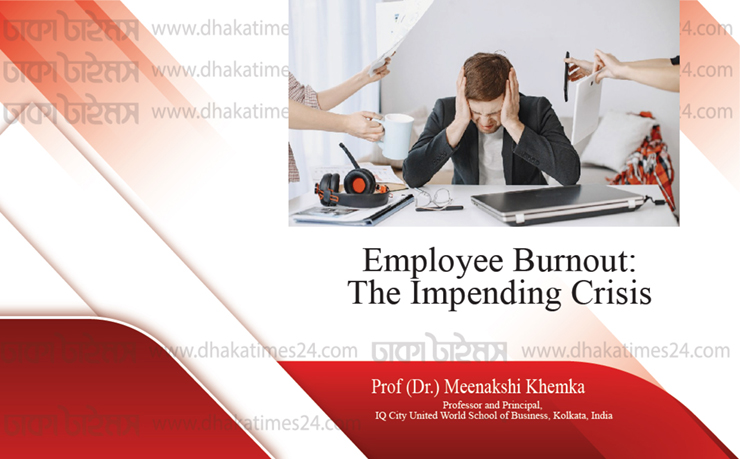
Employee burnout has always been a matter of concern for employers across industries. The digitized world continues to share the concern but makes it more complex by adding on variables like digital connectivity and emotional demands of employees to the conventional parameters like job insecurity, long working hours and employer expectations. The thus generated complex phenomenon impacts employees’ mental and physical health besides their performance in the organization. The digital world has induced the need of having a ‘happening’ life with FOMO (Fear of Missing Out) serving as the bedrock. The concept of burnout is not just working environment related but extends much beyond.
Short term stress, also known as eustress, acts as a trigger for employees to excel amid healthy constructive competition. On the other hand, long term stress leads to burnout as it brings in emotional frustration and mental disconnect from work and colleagues reducing the sense of accomplishment. This pans out to disengaged employees and reduced job satisfaction. For the employers this raises a red flag, more so in the context of the BANI (Brittle, Anxious, Non-linear, Incomprehensible) world.
A quick look at the factors leading to a burnout situation reveals an array of parameters. These range from individual job design aspects like ambiguity in the job role, heavy workload, skill-job-fit - to manager related issues like lack of cordial relationship with the reporting manager, insufficient recognition and opportunities – to organization level variables like organizational justice, poor leadership, lack of organizational vision etc.
Technology induced modern workstyle further contributes to burnout by blurring the work life balance for employees. The inbuilt flexibility may actually become a bane if not managed suitably. The smart devices which help us connect real-time to the global world, are also the demons causing disturbance in the family space post work hours due to constant inboxing of emails, messages and other media. Some developed countries are bringing in new employee welfare laws enabling them not to respond to work related stuff beyond work hours. But while the laws may be passed, the implementation many-a-times depend upon individual managers and employees willing to work extra for quick career growth and financial prospects.
If not handled well, the initial individual discomfort transcends to reduced job satisfaction, increased absenteeism and reduced productivity. The direct implications are increased employee turnover rates and reduced employee morale. Increased recruitment and training costs are the fallouts of these direct implications. Burnout, if not nipped in the bud, may bring-in serious mental and physical health outcomes for employees.
Addressing burnout requires efforts at individual, managerial and organizational levels. As goes the phrase ‘charity begins at home’, the first step is to be taken by the employee himself. Becoming aware of the first signs of burnout should initiate efforts to prioritize self-wellbeing and seeking external help, if required. Reporting managers can contribute by communicating expectations clearly, be mindful of the workloads of team members and being overall supportive. Organizations should provide opportunities for fair growth and genuine recognition of effort.
It needs to be accepted that dealing with employee burnout is a collective responsibility. A healthy work environment will contribute to building a healthy society.
Writer: Professor and Principal, IQ City United World School of Business, Kolkata, India
 ঢাকা টাইমস অনলাইন এর সর্বশেষ খবর পেতে Google News ফিডটি ফলো করুন