National Crisis Gas, Severe Crisis and the Present Reality

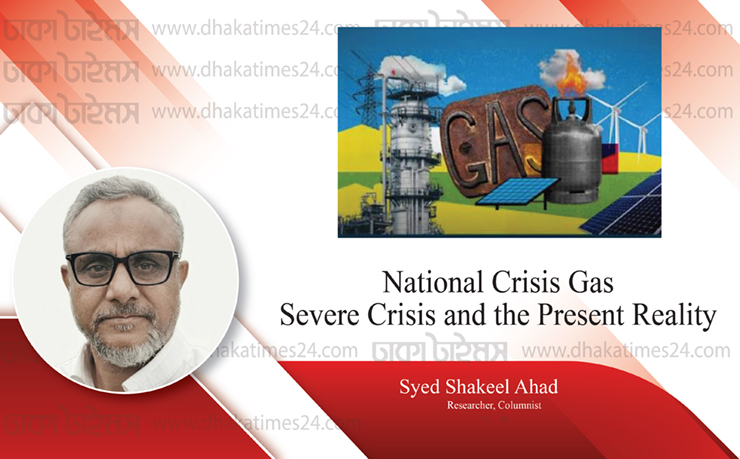
"Full of wealth, flowers, and greenery is this Earth of ours"—yet today, from the industrial belts to urban residential areas and remote villages, a deep sigh of uncertainty prevails everywhere. Consumers across Titas, Bakhrabad, Jalalabad, and Western Gas Distribution regions face an identical plight. Stoves flicker dimly in household kitchens, with many going unlit for days; on the other hand, the wheels of industrial factories—the lifeline of the national economy—are on the verge of grinding to a halt. The captive power plants, which enabled our readymade garment and export-oriented industries to stand tall in the global market, now see their production capacity hit rock bottom due to insufficient gas pressure.
This extreme scarcity of gas supply is no longer a temporary technical glitch or a regional defect in the distribution network; it has escalated into a massive national, social, and macroeconomic crisis. Under the triple pressure of shrinking foreign exchange reserves, volatile international fuel prices, and continuously depleting domestic natural gas production, the overall economic momentum of the country is coming to a standstill.
The Current Reality of Demand and Supply
The daily demand for gas in the country is approximately 3,800 to 4,000 million cubic feet (MMCFD). In contrast, the national grid receives a total supply of only 2,500 to 2,600 MMCFD, leaving a massive daily deficit of about 1,200 to 1,400 MMCFD.
Depletion of Domestic Gas Fields
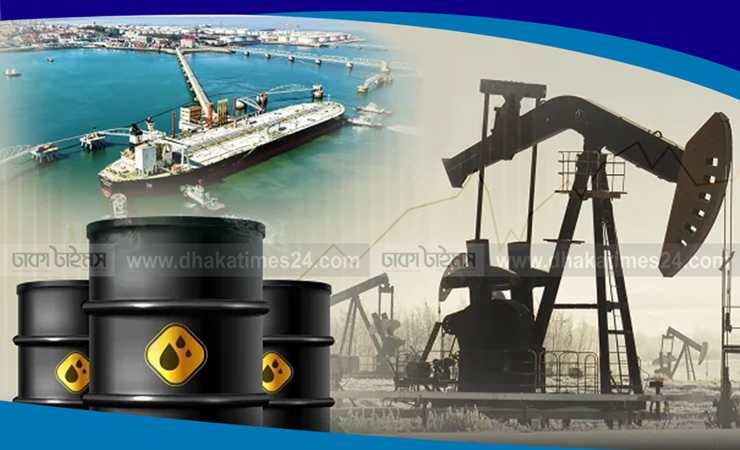
While domestic gas fields previously supplied around 2,750 MMCFD, natural reserves in existing wells are drying up, dropping current production to nearly 1,900–2,000 MMCFD. Although reliance on imported Liquefied Natural Gas (LNG) was increased to bridge this gap, global market volatility and dollar shortages have severely disrupted that supply stream as well.
Roots of the Crisis
Neglect of Exploration: Over the last two decades, adequate oil and gas exploration and drilling were not conducted on land or in the vast maritime territory of the Bay of Bengal. Following the resolution of maritime disputes with Myanmar and India in 2012 and 2014, both neighbors discovered and extracted substantial natural gas reserves from the Bay of Bengal, whereas Bangladesh failed to take proactive steps within its waters. Investigating why the country lagged in gas extraction is critical. Due to a lack of new exploration and extraction, reserves in older fields (e.g., Titas, Habiganj, Rashidpur) are depleting without replacement.
Over-reliance on Imported LNG: To address shortfalls quickly while bypassing domestic exploration, an excessive and single-source dependency on imported LNG was created. When global LNG prices spiked or foreign exchange shortages intensified, this import-reliant strategy proved extremely fragile. Lacking the capacity to buy gas from the spot market at high prices, the entire supply chain collapsed.
System Loss, Leakages, and Illegal Connections: Weak infrastructure, aging leaky pipelines, administrative laxity, and—most critically—unscrupulous networks establishing hundreds of thousands of illegal connections nationwide have severely crippled the sector. These illegal commercial and residential connections create an artificial gas shortage while draining billions of taka in state revenue.
Infrastructure Bottlenecks at LNG Terminals: The capacity of regasification terminals, or floating FSRUs, remains severely constrained. Technical failures, natural disasters (such as cyclones), or routine maintenance shutdowns on a single FSRU instantly disrupt the country's entire supply grid.
Lack of Planning in the Power Sector: The rapid pace at which power plants were constructed was never synchronized with securing primary energy sources (gas or coal). Consequently, despite building multiple power plants, thousands of megawatts of generation capacity remain idle solely due to a lack of fuel, costing the state massive capacity charges.Way Out: Actionable Roadmap
To overcome this prolonged crisis, isolated measures will not suffice; a coordinated and closely monitored three-pronged roadmap must be adopted and executed swiftly:
Strict Crash Program and Eviction of Illegal Connections: Deploy special task forces across all distribution regions (including Titas and Bakhrabad) to immediately disconnect all illegal commercial and residential lines. Exemplary legal action must be taken against the syndicates enabling these connections.
Prioritizing Productive Industrial Sectors: To safeguard the national economy, adequate gas pressure must be guaranteed in export-oriented and manufacturing hubs (such as Gazipur, Narayanganj, Savar, Chattogram, and Mymensingh). Alternate fuels like furnace oil can be planned temporarily for fertilizer factories or less critical sectors.
Rapid Installation of Prepaid Meters: 100% smart prepaid meters must be installed in residential and commercial premises as quickly as possible to curb wastage and prevent indiscriminate gas usage.
Workovers and Drilling New Wells: Through workovers (renovating and enhancing capacity in old wells) and planned development drilling in existing domestic gas fields, a target should be set to inject at least 300–400 MMCFD of additional gas into the national grid within the next 18 months.
Double FSRUs and Land-Based LNG Terminals: Beside enhancing existing FSRU capacities, construction of land-based LNG terminals at Moheshkhali or Payra in the deep sea must be expedited to allow cost-effective gas imports from global markets.
Ensuring Energy Efficiency in Industry: Special policy and tax incentives should be offered to business owners to replace old, inefficient, high-consumption boilers and generators with modern technology (such as co-generation and tri-generation systems).
Extensive Offshore and Onshore Exploration: To attract International Oil Companies (IOCs) for deep and shallow sea drilling, a lucrative and competitive Production Sharing Contract (PSC) meeting international standards must be finalized, followed by prompt block allocations and aggressive drilling operations.
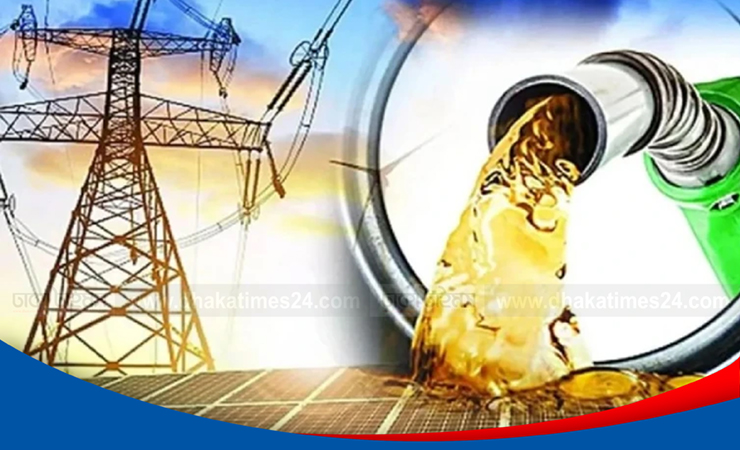
Large-Scale Integration of Renewable Energy: Rapidly increase the ratio of clean solar and wind energy in the national grid. Expanding solar power usage for daytime irrigation and peaking power will significantly reduce the power sector's dependency on gas.
Implementation of Integrated Energy Plan: Implement the 'Integrated Energy and Power Master Plan' (IEPMP) to the letter, striking the right balance between domestic natural resources and imports while preserving environmental safety.Governance, Accountability, and Monitoring
Many promising plans in the past failed simply due to weak execution and lack of oversight. Resolving the gas and energy crisis demands a clear governance structure, accountability, and central monitoring framework:
Form a National Energy Oversight Cell comprising the Ministry of Power, Energy and Mineral Resources, Petrobangla, BGMEA, BKMEA, and independent energy experts.
Mandate Petrobangla and gas distribution companies to publish monthly public updates regarding daily production, supply levels, LNG import costs, and illegal connection disconnections.
Empower the Bangladesh Energy Regulatory Commission (BERC) to operate fully independently in setting fuel tariffs and protecting consumer interests.
Conclusion
The gas and energy crisis is not merely an administrative or technical issue; it is directly tied to national survival, economic sovereignty, and future growth. Overcoming the cost of long-standing policy missteps, irregularities, and neglect will not be easy. However, with genuine political willpower, transparency, and strict execution of short-, medium-, and long-term plans, reversing this stagnation is fully achievable. To build a prosperous and self-reliant Bangladesh, bold and decisive steps must be taken without delay.
Writer: Researcher, Columnist
 ঢাকা টাইমস অনলাইন এর সর্বশেষ খবর পেতে Google News ফিডটি ফলো করুন